
When All Are Asleep But You And The Moon

Sally Purrington
“Hello little reader, Endela here. This is the story and is definitely not real. starring a reader, not that big in height or reading but they try. Jaiden Fortis is their name, kind, average, perfect for messing with, and asleep. You readers are all rolling your eyes as you think you know my big plan. Fine, you’re right to do so, I’m about to send a young adult to another world. You aren’t sighing are you? I guess that’s a usual reaction in this 21st century, never the first it seems.. Oh well you’re still reading, and haven’t stopped reading meaning you’re ok with what’s coming. What, you thought I wouldn’t need your permission to keep going? People these days can’t ‘take it out of the box’. Fine, be that way, I’m going on with the story.“
From the perspective, below from the character- that being Endela- a bed aglow with the shining moon sleeps Jaiden. A halo of dirty blond hair dripping down Jaidens neck with dark lashes of three, maybe four centimeters,and eyes the color of resin encased tree bark- blissfully unaware of the being smiling miscellaneous. Endela’s form consisted of seemingly endless charcoal black hair adorned with gold chains; held up by an amethyst colored silk veil, covering all but the chin on their face. They slinked from the air to Jaiden’s side; a shadow that cut off the moonlights embrace. And with their right index finger, long and ruby red, they tap Jaidens forehead a single time. They whisper their words as Jaiden is taken to where they would not know.
“What waits on the other side of a moon that glows? What worlds when changed bring to you fate that was late? Little white pearl, a new moon you meet so fortis can see.”
“I feel like I forgot to do something,” thought Endela who thinks for a minute before they snap their fingers,” Oh yeah… woops, welp nothing I can do about it.”
The Darker Season
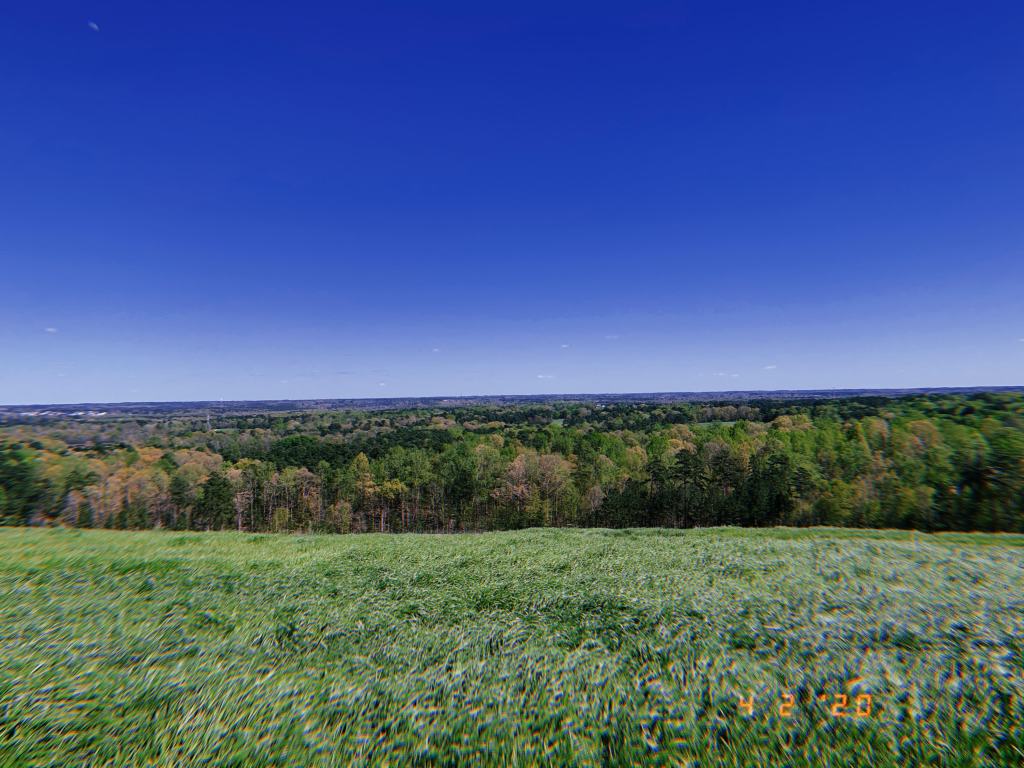
Silas Bradley
Little by little do I see,
The shaking of the changing trees,
Blushing in the changing wind
To shed their cloaks and shiver
In the endless shadow of creeping winter.
The wind whose soft fingers touch,
The rising smoke from shuttered hut,
Begins to chill the noonday light,
And changes to the world’s dismay
The fields green to brown and bruised grey.
Liminal to hearts delight,
When against the pale grey sky,
How the world is set ablaze
By the quilt of red and green
Set over the woven, sleeping trees.
Down the river’s gentle bend,
Through meadow, hill, and town again,
Turns from mellow sun-soaked shape,
Reeling from autumn’s cool breath
to churning, piercing, icy depth.
And over the scene of a moment’s fruition,
Jagged lines of geese sail the plain blue ocean,
Racing through the empty sky,
Off to gather in greener lands
Fleeing winter’s looming demands.
Upon the hill a lone tree stands,
With years of wisdom in gnarled hands,
The last of its brothers it rests alone,
And greets with knowing resignation
The changing of the coming season.
Over the world the spell is cast,
Perfecting moments lost too fast,
Sowing seeds of changing time,
Announcing with bold triumphant greeting
The coming of the Darker Season.
The Pool

Silas Bradley
Cold and Darkness: forces which since the beginning have gnawed at the edges of human existence, standing adversely to man’s world. In Darkness and in Cold life is leached from man, yet he is cursed to yearn for that which he must not have. It calls. To the wicked and the kind, it calls the same. In dreams I heard it calling. I too felt the pull, more primal than thought, more ancient than mankind.
It was greyest January when it struck. Coming as the ancient rites of the yuletide season faded, leaving a stained and soiled world. When the featureless, masking grey sky smothers the land, bruising its hardened form, man cannot but feel the presence of natures deeper than understanding. When the mirth of the holidays no longer masked the season and joy no longer lingered on the icy whispers of the wind, I first beheld the abhorrent sight.
It was during this time that I was living alone, having recently inherited the small yet stately home nestled at the edge of the forest. The home had belonged to my uncle, whose presence in the town had been one of note until his disappearance from the home some years before my arrival. The constant renovations and upkeep associated with maintaining such an aged and so long abandoned home kept me continually occupied. Recently returned from the war in Europe, I had spent the past few months going about setting up new prospects for myself, yet I failed to become truly excited about my options. In truth, as I passed hours at the large windows at the rear of my home, staring at the quivering naked trees italicizing in the winter wind, I began feeling a sense of cold that I could never quite shake.
It came in a dream. Long had I felt that primal pull; and now, I saw. In an instant the fog of slumbering dreams was gone. One still, crystal clear image burned into my now open eyes. It was a pool of water, not eight feet in diameter, in the midst of a dark forest. Snow clung sparsely about the bases of the wretchedly dark trees of the eerily still wood. The trees at its edge wound their knuckle-like roots round its sinister black bank, clinging to the silent disk of liquid. The pool’s mortuously black, reflective body showed only the form of a large skeletal moon, watching, waiting, contemplating high, yet seemingly not high enough, in the sky. The image bathed me in cold. I awoke with startling suddenness, free at last from the dream’s spell, yet for a time I was unable to move. In the dark I fancied I could see my own breath rising in misty plumes above me.
Dreams such as this continued to haunt me night after night. Always ending with the startlingly clear vision of the pool. Try as I might I could not free myself from the visions, and every night I awoke upon seeing it, shocked anew. The vision went on for some time, but now I heard the call. It was not in a language I knew, nor in any form of communication which I can utter even a syllable, yet it was clear to me. It told me to rise. It told me to follow. It told me to come.
The darkness was nearly complete as I rose smoothly from my bed. At that moment I thought of nothing—felt nothing. I listened only to the call. The moon bathed me in grey light as I stroad out the door, the portal gaping widely open behind me. The wind whipped around me as I strode steadily into the shadowed woods, feeling nothing, thinking of nothing as the voice beckoned me onward. I do not know how far I went in this state, just that suddenly everything was still. I was free from my trance. I no longer needed guidance, I knew what lay ahead. The cold bit me to my core, seeming to render me transparent in that bleak world. The silence was complete, broken only by my footsteps, whose dull steps on the frozen earth seemed to line perfectly with my own beating heart.
Suddenly, there it was, the scene exactly as in my visions. I gazed, transfixed on that dead pool, whose unbroken surface lay waiting. It’s remarkably unfrozen body sent a tremor down my spine as I pondered the thoughtless cold its depths must hold. Stooping over it, I found no reflection of my own on its surface, only the sterile shape of the moon, whose figure now seemed peculiarly sharp and brittle, as if it were merely two-dimensional. I gazed plainly up at its dead celestial form, then without hesitation, I plunged headfirst into the center of the pool. Then I was falling through the night sky, high above a quiet earth, watched by only the moon’s mocking face above.
Life isn’t supposed to move this fast

Silas Bradley
Life isn’t supposed to move this fast.
It should ebb and flow
Lumbering slowly up
To slosh against the wall and recede again
Life isn’t supposed to move this fast.
It shouldn’t rise up so sharp
It shouldn’t push so hard
It shouldn’t erupt so violently
It should be peaceful.
Life isn’t supposed to move this fast.
I should see it coming,
Far at the horizon as it glides past
Gentle breeze on my sails.
Life isn’t supposed to move this fast.
It shouldn’t become stacked
Rocking
Teetering before it tips,
dumping.
Life isn’t supposed to move this fast.
Pounding like water
Breaking your faucet
Flooding the sink
And before you know it
You’ve lost it.
Life isn’t supposed to stand still.
It isn’t supposed to halt for a grinding,
shuddering,
Silent moment
before it falls through the floor.
It shouldn’t ache
It shouldn’t bruise
It shouldn’t burn
It shouldn’t shake
But it does.
Untitled
Jillian Wadley

I laid there on the couch, predicting and planning out what was going to happen. I was going to go to high school after two years of waiting. There were going to be hundreds of people-just like me-desperate for the life other kids were blessed with.
The door beeped open for my roommate, Tessa, so she could step into our complex with the package. Jealousy never got anyone far, but I couldn’t help it when it came to her. Tessa had beautiful, long hair that went half way down her back. It always swayed back and forth whenever she walked, just like it was now. My roommate held a large box with a special royal blue sticker on it.
I bolted upright, “Did it come?”
“Sure as hell did, Amazon really saved my ass with that one-day delivery,” Tessa muttered.
I ran to the box to see the sticker in closer detail. It was navy blue with a golden bangle on it. Tearing it open revealed the clothing. It was perfect. The white button-down shirt had nice diagonal striped sleeves that perfectly matched the skirt. There even was a small golden bangle embroidered onto the coat.
“They are a work of art!” I smiled, as I started to hug the soft material closely to my chest and laid back onto the couch.
Tessa replied with a distracted “uh-huh”. But, then she looked me straight in the eye with a rarely lit-up face.
“I almost forgot! I got you a little surprise! You wouldn’t believe how hard it was to get this for you, but, I remember you saying this was your favorite movie as a kid.”
She then pulled from behind her back a cracked and torn CD protector. On the CD it had cursive writing spelling out “Rosa”.
“Tessa!” I freaked out, “That’s illegal! Put that away!”
She laughed and ran to the family room’s CD player. The girl was too fast for me, so I decided to let it past, only this once. I sat down on the couch as the movie opened with a familiar Disney-like tune. Tessa plopped down right next to me and smiled, “Yes, I know, you’re welcome.”
I laughed, “Thanks Tessa, I owe you one.”
She held her hand out and placed her index finger on my mouth, “Now shut up, I gotta see why the government banned this one too.”
We sat there in silence in the soft blanket. The movie started by showing her. It was Rosa. The girl I had always wanted to grow up to be. Rosa created peace between the people and the citizens unfortunate enough to be born with poisoned blood. This blood rarely granted humans inhuman abilities. The blood that Tessa and I, and everyone transported to Russia contained in their system. My mind wandered to the nights I would curl up with my mom and dad, naive to the system the government had put in place. I had been completely oblivious to how real the movie really was. I missed those days when it was even legal for me to go to regular school, and talk to my friends and family, before the government had divided us.
I continued to stare at the movie screen, nostalgia spreading through my chest. It was cold not cuddling my parents. This world was way darker than it was in Rosa’s, but I couldn’t help but feel a little bit of hope as I saw Rosa kick another bad guy to the side. A feeling of hope made me think about a world just like hers.
In the final scene, Rosa held her lover in her arms, kissed them goodbye, and at that, she sacrificed herself to banish the bad guy from their Utopia. Of course, it being a kid’s movie, she survived and helped establish a peaceful society so people like me and normal citizens could live together.
As the end credits started to roll onto the screen, Tessa shut it off and sighed, “I really wish the government wouldn’t be so salty about a cartoon character running a more logical system than he ever could.”
I laughed, “I mean you aren’t wrong.”
Tessa leaned over and looked me in the eye with a rare expression of concern. It had occurred to me that my eyes were filled with tears, and they were falling off of my face.
“I guess I just really miss my parents… sorry about that,” I muttered, wiping them furiously.
“Don’t be, it’s chill,” Tessa responded.
I smiled, my roommate wasn’t the nicest person in the whole world in other people’s eyes, but she was to me. She only let a few people into her life, and knowing that she let me into her small circle always put a grin on my face. Tessa did whatever she could to make sure I wasn’t hungry, upset, or stressed. I wrapped my arms around her and buried my face into her shoulder. It was nice hugging someone after two years. Two whole years.
“Can I just stay here for a moment?” I asked.
“Yeah, I don’t care,” she reassured.
The bright light shined through the thin curtains as I laid there on my side looking at my alarm clock. I noticed that my roommate had tucked me into my sheets delicately from the night before.
Something in the pit of my stomach felt off, but I ignored it and tried to organize my thoughts. Think Kira, think! The smell of something burning straightened my mind just enough to remember that it was the first day of school.
“Kira! Get your toast already!” Tessa yelled from across the apartment room.
I grabbed the piece of burned toast. Usually, I would grin and bear the wretched taste but my stomach was already queasy.
“I’m really sorry, I’m not hungry.” The charred toast crumbs fell onto the plate.
“Well don’t blame me if you starve on your first day!” she retorted.
Tessa left the house with the door wide open as usual. I would normally yell at her, but instead I looked at the doorway out in awe. I rarely left the house, due to strict regulations on times certain “citizens” could exit and enter their homes. My roommate was allowed out nearly every other day for some reason she never explained.
I tore off my shirt and pants quickly. The skirt slipped up and zipped perfectly while the buttoned up blouse felt a little stiff. I barely even noticed, because next thing I knew Tessa was slamming on the horn for me to hurry up. I strained my eyes to look outside, with the reflective white snow not helping in the slightest. The wind blew into my face bitterly as my foot took a single step outside. It was something my fourteen year old self took for granted, being able to walk out of a building whenever. I shook my head, trying to remind myself that thanks to the new school, I would be able to go outside everyday.
I shut the shotgun’s door behind me to prepare for a drive.
“I don’t really get how you liked that movie so much as a kid,” my roommate said with her hand on the steering wheel.
I laughed, “I just really like the idea of peace.”
She looked behind her and backed up, adjusting the car’s driving mode.
There was more silence as my mind began to fill my head with worries about classmates, classes, and how to meet new people. And what if-
“You know we can make Rosa a reality?” Tessa interrupted.
“Huh?”
“Y’know if we just overthrew the government or something.”
I stopped looking at the plain repetitive scenery to look at her face. After two years of knowing her, Tessa was really hard to read. And sure, overthrowing the government did sound nice but our powers would be useless if our wristbands were kept on our wrists. Even if we managed to get them off, alarms would blair and the “professionals” would have to deal with the ordeal.
“I’m not going to give you any ideas…” I muttered.
Her eyes met mine for a brief second from the car mirror, “That’s fair, but I already have a plan.”
“Tessa… not another plan of yours, I always take the blame for them while you get away untouched.”
“Don’t worry, you won’t be involved at all. And, even if I got caught, the school would be too afraid to do anything to me. Plus, I bet you’re just too obsessed with your father’s old position.”
I sat there quietly. She knew I didn’t like talking about myh dad. My roommate would only bring him up if she was really serious about this plan of hers. She must’ve been desperate for this dumb thing to work. But, if I pushed her she wouldn’t spill anymore.
I turned back to the window to see the plain scenery change dramatically. The blindly white snow had been replaced with artificial-looking flowers that were colored royal blue and a bright yellow. Our car raced past a big sign reading “Welcome to the Lucky Black Cat Academy.”
It’s just a feeling

Silas Bradley
It’s just a feeling,
The loss of what used to be.
The hardest love is healing
The plaster on the ceiling, peeling
As you wait for your heart to breathe,
It’s just a feeling.
The moment when your heart stops beating
There’s always a door to leave.
But the hardest love is healing
Yet on the night the dawn is creeping, reeling
The darkness finds relief.
Change makes its own feelings
Then run in the meadow, singing
The bright light isn’t hard to see.
It’s just a feeling
Live a day free of meaning,
Color a life that’s turned to grey
It may be strong but It’s just a feeling,
The hardest love is healing
A Historic Definition
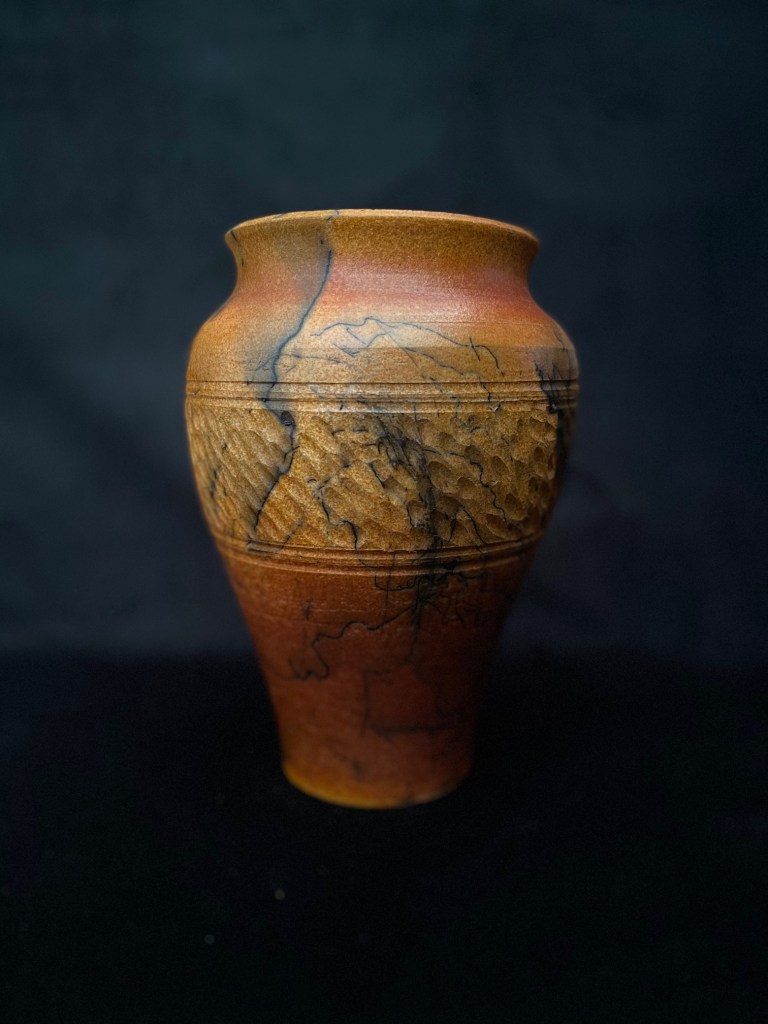
Ethan Erickson
History is vice. Suffering, murder, rape; history tells a tale of human darkness and depravity. At the same time, history is romance. Happiness, bravery, and love all hold leading roles in this play. Sometimes, violence and killing show man’s power, as with Napoleon; other times however, it shows man’s weakness, as with Hitler. Debauchery and love can mean nothing, or everything, depending on one’s vantage point. This dissonance and frequent contradiction may dissuade people from studying the subject, for fear that they will never unravel an enlightening Marx-style ‘truth,’ that they will waste away at a desk, staring at this majestic web of irony and illogic: history. They are right: as long as humans continue to exist, we will never discover a meaningful understanding of our purpose, and it is very likely that, if they choose to study history, they will sit paralyzed at a desk all day, in awe of the limitless tapestry before them. In fact, they will almost certainly live in madness and delirium. However, this suffering will only arrive once they recognize what history is: our state of perception.
How, you ask? Well, we define history as the past. We also live in the past. Our sensory perception is a time-bound process; nerve signals take some defined length of time to travel from receptor to brain. Thus, when we touch something, there is a lag between when we actually touch it and when our brain receives that sensory information and creates the perceptual experience we call “touching.” Although we may be in the present, we can’t perceive it. Thus, by our perception, we live in history. Although we may live only a femtosecond away from the present, that detachment from our own existence, our state of being, philosophically accomplishes a great deal. Most importantly, this revelation that we perceive our life as it’s already occurred places us closer to those historical figures that previously were sectioned off from us. We perceive our life in the past, and so did every human, ever. Rather than separating ourselves from history by living in the “present” we now recognize the fact that we are living in the same history textbook as Julius Caesar, Abraham Lincoln, Susan B. Anthony, and that group of cossacks from 1562. Therefore, history binds us all.
If history serves as our “state of perception,” and if perception is subjective, then how can we study history objectively? Well, we can’t. Howard Zinn, a renowned historian, states in an interview that “history is always a selection from an infinite number of facts and everybody makes the selection differently, based on their values and what they think is important” (Zinn). Not only do we select from an “infinite number of facts,” we also create them ourselves, through language (Zinn). For example, let’s posit one writes about Paul Revere’s ride. Describing his alert to the townspeople as a “shriek” versus a “yell” presents two different images for the reader, depending on their personal associations with those words. Thus, studying history is a balancing act of imagining scenes or even societies given descriptions, yet restraining that imagination with an inherent linguistic skepticism of those descriptions. The skepticism reaches beyond language’s natural obscurities however; when examining a source one must gaze into the life of the person writing it. Is there any reason this person would consciously lie? Or even omit certain truths? Given their position in society, would this person’s truth even be credible? The answers to all of these questions lie in the historian, and their own biases. Therefore, history is a subjective enterprise, and given its definition as our “state of perception,” both neurologically and philosophically, this logically computes.
Thus, how does history inspire madness in the individual? Well, it’s infinite, basically subjective, and a ‘true’ understanding of it is incompletable. For many, this freedom of belief and interpretation constitutes a seemingly mad situation. Of course, others revel in this subjectivity. However, history, unlike a creative discipline such as writing, sets boundaries on this freedom; loose as they are, they dictate that whatever one notes as history must have actually happened. Most of the time what happened is up for reasoned debate. Thus, claims that posit Columbus’ vessel to the Americas as a unicorn in search of rainbow goo disintegrate under their unreasonableness, to the dismay of the Bronies. Therefore, the limits on historical interpretation collapse the psyche and imagination of those comfortable with absolute intellectual freedom, and induce a sort of madness in them as well.
History is our “state of perception”; it is everything we perceive, in every society and period in time: essentially, life. Furthermore, something or nothing programmed our minds with a capacity to reason; if we study history, this capacity will frequently face abuse, and a sort of madness will illuminate itself. Therefore, if this madness is a symptom of history, then it must be of life as well. As humans, we work to understand life. Thus, even if we never truly absorb or defeat this madness, this incongruity between reason and humanity, this ubiquitous fact of our being, we must never desist from the pursuit of understanding its mother, history, and, synonymously, life.
Works Cited
Zinn, Howard. Interview. Conducted by Barbara Miner, 1994. https://www.zinnedproject.org/why/why-students-should-study-history/
Mamihlapinatapai

Isabella Fordin
It’s a warm feeling. The sharp, electric energy that soars through your body. The hypnotic feeling of holding eye contact that leaves your lungs breathless and your stomach hollow. Your locked eyes are like magnets pulling each other closer in proximity, yet nobody moves. Each other’s body language sends perfectly clear messages expressing the want between the two parties yet the hesitation that overwhelms both. Although the entire subway ride only lasts four minutes, waiting for your coffee in the local cafe only lasts two, or the passing person in the grocery is only a quick glance, these moments feel like an eternity. The infinite amount of numbers between one and two stretch themselves as far as they can go within those mere seconds of exchanged glances, dying down in intensity when the other partner leaves, yet never really going away.
Mamihlapinatapai: equally as difficult to define as it is to say. The word itself derives from the indigenous language Yagan from the South American region; however, the feeling it depicts is a worldwide phenomenon. Translated it means the wordless, meaningful look shared by two people who both desire initiating something but are reluctant in doing so. Billions of people across the globe experience this feeling of mamihlapinatapai and yet—for the better—there is only one word that describes this stunning experience. Within this word, a whole paragraph of feelings and emotions are verbalized. Just as many situations cannot be explained within a set amount of words, neither can mamihlapinatapai. Parts of the anecdote above can be described with yearning, wanting, longing, intimate, captivating, breathtaking, all-consuming, or even unique, though none of these words create the same impact as mamihlapinatapai. All of these describe aspects of the story, but do not encompass the entire event. Yearning means longing for something, which could be applied in this context, but it can also be used when someone longs to come home or go to sleep. Intimate is an important aspect of this feeling, however it can be used in any affectionate scenario between two people; the same goes for any descriptive word one can think of. Simply put, a word does not exist in any language besides Yagan where a scenario is described with such detail and vivid emotions within its meaning.
Besides the lack of words within this world that could properly translate mamihlapinatapai, lies the point that this word should not be translated. An attempt at translating such a unique and specific word dilutes the intensity and intimacy that was created. The specificity of mamihlapinatapai directly coordinates with the specificity of the scenario. Changing the word means changing the story.
It’s a warm feeling. The sharp, electric energy that soars through your body. The hypnotic eye contact, magnetic glances, and purposeful body language. Every aspect of this situation drags each partner closer together without any movement. Both hesitation and desire soaring through the air. It’s indescribable. It’s intricate. It’s mamihlapinatapai.
Kool-Aid Wars

Avery Wood
When Jay was 10 years old, he got a baseball glove for Christmas. It had just stopped snowing the day before leaving a thick layer Christmas morning and the warmth of the small house was an absolute blessing. The glove was his big present for the year. On a rare occasion, the whole family had come home for the holidays. And nine kids ranging from ages 7 to 27 were gathered around the small living room with their parents and the moment was so special in itself that nothing else was needed to make the day perfect for Jay. But still he got the perfect present. The very thing he’d wanted for months now: to play with his friends down the road and eventually join the school team when he was tall enough and fast enough. But he couldn’t very well start practicing without a glove and his older brother Steven’s was so worn, it was literally coming apart at the seams. And that was why this present was so perfect. Once the rest of his family finished opening their presents and lunch was all done, Jay and his younger brother Kevin took their new gloves outside and started breaking them in. Soon enough their older brothers and sisters were joining in to play various games of catch and tag as a family. Looking back, Jay still swears that when he turned to look at his mom and dad on the porch, their eyes were beaming as bright as stars themselves. The nine of them played and played into the crisp winter night until there was no light left from the sun.
Jay looked back on that day fondly, even 5 years later when he and Kevin were on the official West Flint High School baseball team. It was his salvation, baseball. When they didn’t do too well on the farm that year and Mom was worrying sick, Dad stretching himself so thin day and night, to fix the unfixable, they still had the team. They still had each other. And they still had the game. Jay put everything he had into being the best. Working after practice, on the weekends, after work and chores on the farm, any free moment he had. And during the summer the team met at the field down the road for their extra practices. There wasn’t much light after dark but they did what they could with what they had.
The thing about this field down the road was that “down the road” really meant miles and miles away. Most of the land surrounding Jay’s house was his family’s farmland. And next to that was another family’s farmland and another and so on. The field was more close to the school than anything, but the bus doesn’t take kids home late at night. This, of course, presented a problem.
One especially long and exhausting day, Jay and Kevin got so caught up in practicing batting in right field that they completely lost track of time. And they forgot about dinner. They always had dinner at 8 o’clock on the dot. Not 1 minute later. This was a rule that had not only been strictly enforced with the 7 older kids in the family, but one that was not to be disobeyed for fear of their father’s wrath and their mother’s worrying. When Jay checked his watch it was 9:05. They were, for lack of a better term, screwed. They booked it home through their aching muscles and exhaustion and they made it home a whole hour and a half later. And yet the lights in the main room were off. Jay thought maybe they had gotten away with it. Or at least wouldn’t have to deal with it until the next morning. But some little part of him in the back of his mind whispered to him that it was too good to be true and he knew better then to assume his parents had gone to sleep. So he wasn’t all that surprised when the door was unlocked and there was their dad, wide awake in the dark living room in his worn green cotton chair, arms crossed and eyes blazing. Kevin and Jay stood completely still in the doorway, unable to move an inch. Not because of their aching muscles but from utterly petrifying fear. They stood there for what felt to Jay like hours or maybe even days. Finally when it felt almost unbearable, Kevin opened his mouth to say some sort of apology or excuse that would in no way make it better, Jay knew. But before Kevin could try, their father spoke with lethal quiet,
“You’re late.”
—
“Dad, I-” Jay started but didn’t get the chance before his dad continued.
“You’re really late. Your mother’s been so worried and you have work tomorrow morning before the sun comes up. No one in this house has time for you both to be going missin’ all the time. We have dinner at a specific time for a reason.” His voice was rising with every word until the cool calm had turned into shouting.
“Dad, I’m sorry. Joey and Tommy were out later than usual helping keep the lights on and Fiona was there to watch and it’s the summer and we just lost track of time and when we realized, we sprinted home as fast as possible,” Jay rambled.
“I don’t care for any of your excuses, boy. I don’t have time for ‘em. The rules in this house ain’t rocket science and there ain’t that many, but they’re set for a reason. So your mom doesn’t worry herself sick and we can all get a good meal in our systems and some good night sleep before a hard day’s work tomorrow.”
“We promise we’ll be up bright and early doin’ the same good work tomorrow, dad,” Kevin promised.
“Oh, I know you will because I will not tolerate any less. Just like I won’t tolerate this kind of late night again. You hear me?”
“Yessir,” they nodded at the same time. Their father wasn’t an overly strict man and he was a good dad. He raised all his kids to work hard and to be kind people, Jay knew. He was just stressed and overworked and constantly worrying about their family. Of course, he cared about his kids and their passions but he had to care about getting food in their mouths first.
He was actually the one who encouraged Jay into baseball in the first place, because he himself loved it in high school. Whenever he could he’d play catch with Jay and Kevin when they were young. It was only the practical rules he enforced with that lethal quiet he was using then. He left them to muster up the courage to take the steps down the hall to their room. And once the door was shut they could hear their parents fighting in that hushed arguing tone they used on rare nights. But Jay and Kevin could still hear their muffled voices because the walls were too thin. Their mother was mad at their father for yelling at them, and in return their dad was mad at her for defending them when she knew Jay and Kevin messed up.
“They know the rules and they broke them. I should think that’s perfect grounds for yelling.”
“Come on, they’re kids. Talented ones at that. But they just want to have fun right now and you know how cruel the world is out there, better than anyone. Let them have this time now to be boys and make mistakes and just have fun. It’s just one dinner.”
“It’s not just dinner and you know that. We’ve had these rules for 6 kids now, and I’ll be damned if I let these last two run wild. Things aren’t about to go and change now, after all these years.”
“Do you remember playing when you were their age? You loved it. It was your escape, your safe haven.”
“Well they can have their safe haven as long as they’re not late for dinner. That’s the rule.”
“They’re late because the park’s so far away. They don’t have a place to play ball around here.” There was a long contemplative pause. And the rest of the conversation turned to muffled quiet. But Jay couldn’t spare another moment of night to try and listen with field work in the morning. So he drifted off to sleep and awoke to a loud squawk.
—
When the morning rooster crowed and Jay practically fell out of his bunk, they made their way swiftly out to the field to begin shucking corn and planting soybeans for their next harvest. Kevin usually brought his radio out while they worked but there was no music that day. Not when they hadn’t spoken to their dad, who was gone when they woke up, leaving in his wake that physical tension in the air when you know you’re in trouble but don’t know what comes next. They worked fast and without pause all morning and when the afternoon dawned their mom called them to the porch for lunch. Eva, their older sister, gave them a weary look, the only indication that she heard the fight last night. Jay knew she wouldn’t bring it up unless they needed to talk about it, such was Eva. Always playing the mediator of the family. In that moment, Jay wished they got to see her more often but she was always either helping Mom and Dad with the vegetable stand or with her many different boyfriends.
They were just starting on their sandwiches when their dad pulled up the drive with his truck. He looked solem when he got out of the car, Jay thought. But there was also this flicker of determination in his walk that puzzled Jay further. Wasn’t he still mad? Their father is not the type to forgive and forget and certainly not look…almost excited? He marched straight to them and asked plainly,
“Do you really love baseball?” He was asking Jay.
“Uh–yeah. Yes. I love it. I’m so sorry about last night, Dad. We just got carried away, lost track of time.”
“I know, I know,” he said waving a dismissive hand, like it wasn’t anything at all. The three of them must have looked aghast because he turned to address them all: “But is baseball important to y’all?”
“Yessir, being a part of something, on the team, is something really special. Especially in this small town,” their father looked satisfied but Jay continued. “We’re getting good, too. Maybe not college scholarship good but it’s competitive and fun and we work well together.”
“Plus the chicks love it!” Kevin added with a smirk, followed by a whack on the head from Eva.
“What are you, fifteen? What do you know about chicks?”
When Jay turned back to face his dad, he was gone.
—
The next morning Jay woke up to a new sound. Not the rooster or their mother yelling at them, but the sound of a brush mower. Jay walked outside in his pajamas to meet his mother on the porch watching his father with a smile. Watching his father, Jay realized, chopping down the crops in the left field.
“What the hell is he doing?” Jay asked, bewildered.
“He’s clearing the field. It seems that’s the last harvest we’ll have in that field for a while,” she returned, like it was the most obvious thing in the world.
“But why? Wait what?” not understanding why they would ruin a perfectly good crop.
“Isn’t it obvious, dummy? We’re gonna build a baseball field.”
“We’re-…wait…huh?”
She turned to look at Jay. “You guys stay out too late. The baseball field at the park is a soccer field. And it sucks. The walk is like an hour away, and most of your friends live closer to us.” She raised her hands to present the future baseball field as if she could already see it, “…solution. Besides, I miss a full house. It’ll be nice to see a full team of boys out there.”
“Or girls!” Eva chimed in, now leaning against the doorframe.
“Or girls,” their mom replied.
“Bu-But…,” Jay tried but at a loss for words. “But what about the cost. This will be a whole expensive project. And we need that crop.”
“Yes, all good things to consider, and it’ll be a big project that will require plenty of hands, but we can make a …homemade field. Your daddy crunched the numbers and it won’t cost us too much to build. As for the crop, we’ll manage. Especially with the extra hours cut from yalls walking home.” Jay, although ecstatic, couldn’t help feeling worried for his family. This was more than he could ever imagine but at what cost? It was just a game after all. And this was his family they were talking about. He figured his thoughts were written all over his face because his mom took his hand and said,
“Family always finds a way, JJ.”
They sat there watching his dad for a while more and then when Kevin finally woke up, the whole conversation was repeated.
And then they went to work.
—
The whole neighborhood came over to see what the commotion was all about and once they heard the plan, there were all hands on deck. After a week, they cleared and flattened the field. Jay’s mom worked on sewing old seed bags to cardboard for makeshift plates and his dad bought some chalk, wooden planks, and chicken coop netting from the hardware store and got to work building the backstop and lining the field. But even while they built, they played.
One afternoon, a few of Jay’s friends came over to help bring in some benches for the pits and to throw the ball around.
“You’re really gonna sit there and tell me you think Kelly’s hotter then Farrah Fawcett?”, Tommy asked Kevin.
“I mean it’s Kate Jackson man.”
“Ok, you’re so wrong. Jay, back me up here.”
“Sorry Kev, I’m with Tommy. Kate Jackson’s forehead’s way too big.”
“You guys are seriously pigs,” Eva called out, hauling the cooler over to the pit.
“Yeah, quit your talkin’ and come help us with lunch. I raise gentlemen in my household,” their mom yelled from the porch.
“Yeah, we’re respectable men here…” but when their mom turned he winked and whispered, “Farrah Fawcett.”
“Oh gross,” their mom wacked him in the head. “Jerry, you’re too old for that.” And they were all crying, laughing so hard.
—
They spent the rest of the day playing various games of ball tag and mini baseball but they ended the day playing their all time favorite.
“Ok, if you can get the ball in the heart of the cornfield then we win,” Tommy said to Kevin. They were in teams of two: Tommy and Kevin, their dad and Jay, and their mom and Eva. Kevin was next to bat and Jay threw him a curveball. Despite Jay’s best efforts, Kevin still made contact and used all the power in his skinny legs, hitting the ball straight ahead all the way past the markings of the end of the field and into the corn. And then he was running to first while Jay and Eva were sprinting as fast as they could through to the cornfield, each trying to get to the ball before the other. Jay got to the edge of the field and began combing through the thick stalks of corn almost ready for harvest. He waded and waded and he could hear Eva’s ragged breath close behind. But there, by the corner of his eye, he saw the little ball. He grabbed it and ran. One step in front of the other until he made it to the clearing. But right as he stepped out of the cornfield, he got splashed. A cool, sweet smelling red suddenly soaked his clothes and his hair and he doubled back a step before he could comprehend what had happened. He looked up to find Kevin and his dad falling over laughing so hard, each holding one end of the cooler rimmed with red. The faint pungently sweet smell of Kool-aid everywhere. He had no thoughts in his mind, only a pure rage.
He shook off the Kool-aid like a wet dog, a burning fire in his eyes, and marched past his dad and brother still on the ground laughing. He walked and walked till he got to home plate, picked up the bat, and took his stance.
“You’re gonna regret that,” is all he said as Tommy went up to the mound. He pitched, Jay swung, and the only thing in the world was the crack of metal as the ball and bat collided.
—
She hears the bat crack and she knows he has to start running. He looks only once to see if the short is far enough from second to get two bases on him. He’s deep in left field, he can do it, she thinks. No one else in the crowd seems as enthusiastic. He runs and runs as fast as his legs will take him. He curves through first and keeps going. He goes and goes and looks up again to see where the short is now running fast to catch him before he hits second. He’s close enough that he makes the position to slide. He slows just a little. The short’s only four strides away. He launches into his slide as the short reaches his glove down to tap him out. But he’s already on the bag.
“Woww,” her dad cheers. “That hit was only in left field, that was amazing!”
“And he went all the way to 2nd, even though the shortstop was so close,” Addie said with all the pride in the world for her favorite team, the Red Socks.
“You know, when I was your age we didn’t get to go to games like this. You are really lucky, young lady.”
“Dad, I think you’re the lucky one to have a daughter this cool.”
“Ok hot shot. You say that now, but just wait. One day when you’re out there on a big softball field, your team might chase you around the field with a tub of Kool-Aid. See how cool you are then.”
“Dad, what?”
“Nevermind,” he says, as he smiles and recalls that little boy at Christmas with the brand new baseball glove.
Photography – Spring 2021


